
Phone distraction statistics show 3,208 people died in distraction-affected U.S. crashes in 2024, and the habits behind that number may feel uncomfortably familiar.
Did you know a five-second glance at your phone at 55 mph covers roughly a football field with your eyes off the road? That is NHTSA’s finding, and the latest phone distraction statistics show how often drivers take that gamble. It rarely feels risky at the moment: a buzz at a red light, a quick reply on the highway, a glance at a notification. But your phone doesn’t need to be in your hand to pull your attention away. Even thinking about a message can slow your reaction when traffic changes.
My Drive Guardian built this guide to break down the newest federal and industry figures, show what they reveal about real driver behavior, and share simple ways to cut phone distractions on every trip.
Key Takeaways
- Phone distraction statistics show how risky it is to check messages, notifications, or calls while driving.
- Texting is especially dangerous because it distracts your eyes, your hands, and your mind all at once.
- At 55 mph, reading a text for five seconds means travelling about 400 feet.
- Because teen drivers are less experienced and have more difficulty managing distractions, they need explicit regulations about phone use.
- Hands-free calls do free your hands, but they can still distract you from changing road conditions.
- Silence notifications, secure your phone, and set your navigation before you leave to avoid distractions.
- My Drive Guardian offers connected driving-safety features that support families in building safer driving habits.
What Do the Latest Statistics on Phone Distraction Show About U.S. Roads?
NHTSA’s finalized 2024 data show how serious distracted driving remains on U.S. roads. These figures cover distractions beyond phone use, so it’s important to separate overall crash statistics from cellphone-specific findings.
| 2024 measure | Figure | What it tells us |
| Deaths in distraction-related crashes | 3,208 | Overall impact of distracted driving |
| People injured in distraction-related crashes | 315,167 | Injuries associated with distracted driving |
| Share of all traffic deaths involving distraction | 8% | Scale of the wider problem |
| Deaths in crashes involving cellphone use | 437 | Phone-specific fatality figure reported by IIHS |
| Drivers observed manipulating handheld devices | 4.50% | Observed phone manipulation in the national survey |
These figures measure different things. The 3,208 deaths include crashes involving many types of distraction, while IIHS reported 437 deaths in crashes involving cellphone use. Phone-related crashes may also be undercounted because investigators cannot always establish whether a driver was using a device.
What Do Distracted Driving Statistics Tell Us?
Distracted driving statistics show why drivers need to pay attention to more than the road directly ahead. A driver must monitor traffic, judge distances, anticipate sudden braking, notice pedestrians, and respond to changing conditions.
Using a phone breaks that process in three fundamental ways:
- Visual distraction: You look away from the road to read a message or check a notification.
- Manual distraction: Taking one or both hands off the steering wheel to hold/use a phone.
- Cognitive distraction: Not paying complete attention to driving – being distracted by a chat or message.
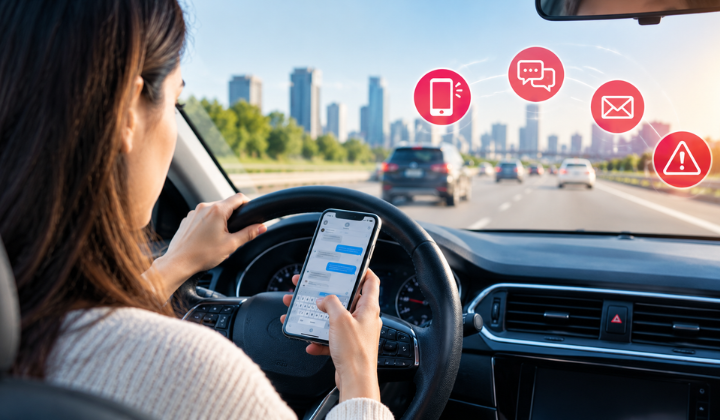
Texting can combine all three types of distraction at once. Even when a driver glances down for only a few seconds, traffic conditions can change before they look back up.
Why a Five-Second Glance Can Be Dangerous
At 55 miles an hour, a vehicle travels around 80 feet a second. Looking at a text for five seconds means travelling about 400 feet without consistently watching the road.
That space can be the place where a car ahead of you brakes, a person steps into the crosswalk, or traffic slows down unexpectedly. Drivers may not have adequate time to see the hazard and react safely.
The takeaway is simple: a quick message is never worth sacrificing attention on the road.
Texting While Driving Statistics and Teen Driver Risks
Texting while driving statistics are especially applicable to parents of teen drivers. Young drivers are still building their road experience, and a message can distract them when they need to notice hazards and react quickly. NHTSA has cited research linking texting with a sharply increased crash risk for teen drivers, so family rules should make one thing clear: messages can wait until the car is safely parked.
Young drivers may have additional issues due to less expertise in spotting hazards and handling unexpected events. A notification from a buddy or a group conversation, or a navigation change, can all vie for the attention needed to drive safely.
Parents can help by establishing clear expectations before handing over the car keys:
- Agree messages are kept until the vehicle is parked safely.
- Before commencing the voyage, set navigation and music.
- Keep your phone away from reach when you are driving.
- Ask passengers to handle calls or messages when necessary.
- Model the same behavior instead of checking a phone at traffic lights.
These rules work best when they apply consistently to adults as well as teens.
Source: NHTSA teen driving safety.
Cell Phone Driving Statistics: What the Numbers Cannot Show
Cell phone driving statistics provide an important warning, but they do not capture every phone-related incident. Crash investigations rely on available evidence, statements from witnesses, and information from drivers. Sometimes investigators may not be able to determine whether a phone was involved in a crash.
The IIHS points out shortcomings of police-reported crash data, suggesting that cellphone involvement may be underreported. This means that the data recorded are not a thorough tally of all collisions caused by distraction from phones.
It is also important to distinguish between different activities. Holding a phone, typing a message, scrolling through social media, and talking on a hands-free call don’t all distract you in the same way. But hands-free talks nevertheless can take a driver’s mental concentration away.
The safest approach is to avoid nonessential phone activity while driving, rather than assuming a particular interaction is harmless.
How Can Drivers Reduce Phone Distraction?
Statistics explain the scale of the problem, but everyday habits can help prevent it. Drivers do not need to wait for a close call before changing how they use their phones.
Practical Ways to Stay Focused Behind the Wheel
- Activate Do Not Disturb while driving. Silence nonessential notifications before setting off.
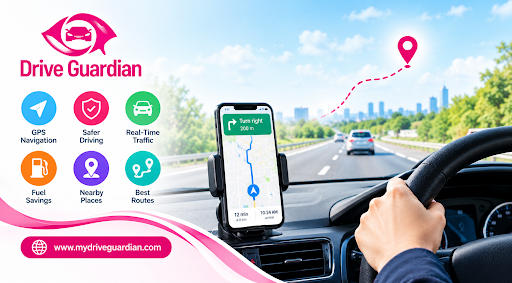
- Set your route in advance. Enter your destination and review directions while parked.
- Put your phone out of reach. A phone in a bag or secured compartment is harder to check impulsively.
- Pull over before responding. If a message needs an immediate response, stop in a safe, legal location first.
- Ask passengers for help. Let someone else manage navigation or communication when appropriate.
- Make safety a shared responsibility. Parents, employers, and fleet managers should set clear rules and reinforce them consistently.
Technology can offer further support. For example, My Drive Guardian provides driving safety features that empower families to stay informed and promote safer driving behaviors. Any technology should complement responsible behavior, not replace a driver’s full attention.
Explore a More Proactive Approach to Driving Safety
Phone-free driving starts with everyday choices, but families may also want better visibility into other driving risks. My Drive Guardian combines vehicle-connected safety features with family notifications and trip information to help families stay informed. If you want to understand how the system works and whether it suits your needs, book a demo to explore its features and ask questions before deciding whether it is right for your family.
Frequently Asked Questions
Phone distraction can make it harder for teen drivers to notice hazards, judge traffic conditions, and respond promptly. Parents can help by setting clear phone-free driving rules and discussing safe habits before their teens drive independently.
Some technologies can assist with safer driving practices, but they don’t all do the same things. Vehicle connected safety technologies can help families monitor some driving related risks, but phone distraction still demands clear guidelines and responsible driver behavior.
Texting can take a driver's eyes off the road, hands off the wheel, and mind off driving. Reading or sending a text takes about five seconds, during which the vehicle continues travelling.
Hands-free calls mean you don’t have to hold a phone, but they can still take your mind off driving. The safest choice is to skip unnecessary calls and keep your full focus on the road.
Plan your route in advance, turn on driving mode if you have it, silence your notifications, and keep your phone out of sight. If you're going to use it, pull over and park in a safe, legal location first.