
- Texting and Driving
Understanding Phone Distraction and Safer Driving Habits
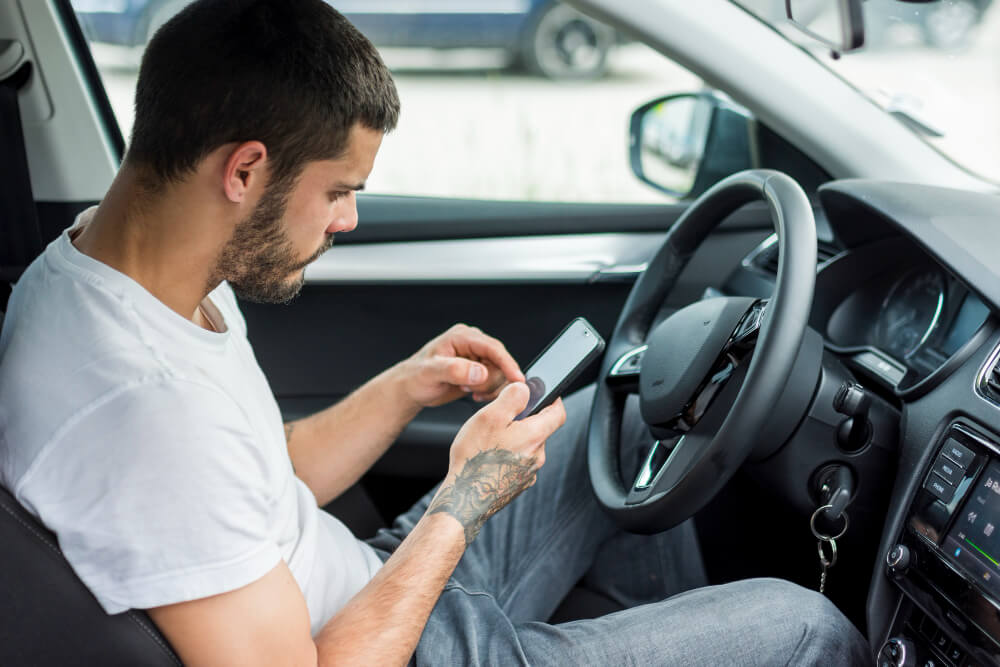
Texting and driving can turn a routine trip into a life-changing decision. Just a quick glance at a phone can take your eyes off the road, your hands off the wheel, and your attention away from what matters most, driving safely.
Learn about the latest texting and driving statistics, the dangers of distracted driving, texting and driving laws, and practical ways to break the habit. Discover how tools like My Drive Guardian can help encourage safer, more focused driving habits.
What Is Texting and Driving?
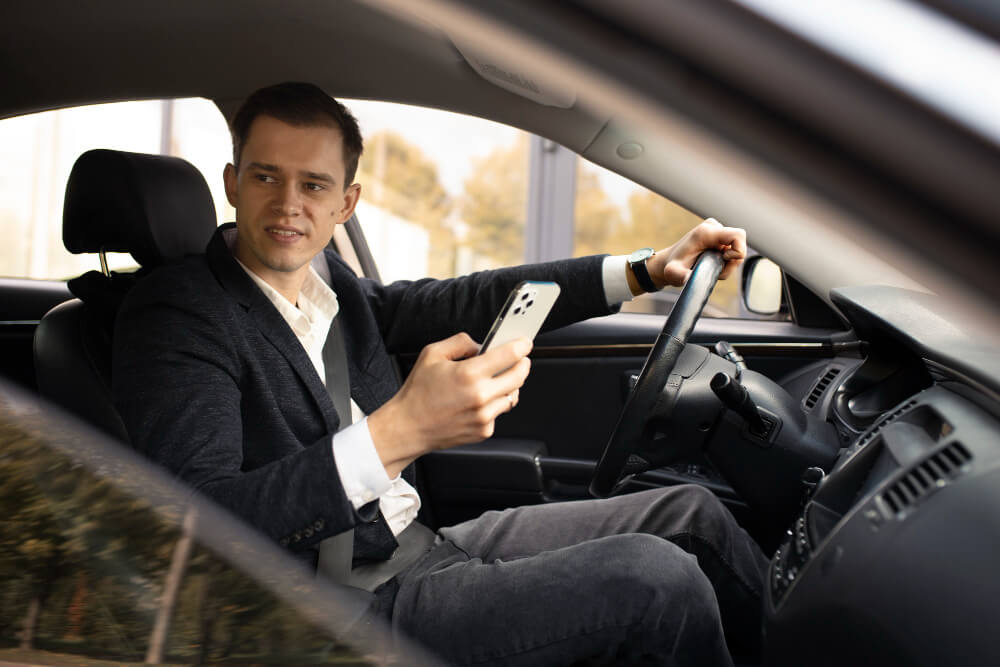
Texting and driving means reading, writing, or sending a message while operating a vehicle. It’s one form of distracted driving, but a particularly dangerous one, because it pulls on three types of attention at once.
Visual distraction takes the eyes off the road. Manual distraction takes the hands off the wheel. Cognitive distraction takes the mind off the actual task of driving, even for a driver who’s technically still looking forward. Texting while driving hits all three at the same time, which is part of why it’s treated differently than, say, adjusting the AC.
Texting and Driving Statistics
How Common Is Texting While Driving?
Texting while driving remains a widespread problem in the U.S., despite growing awareness of its dangers. At any given daylight moment, roughly 660,000 drivers in the U.S. are using handheld phones behind the wheel, according to NHTSA estimates. A 2024 AAA Foundation survey highlights the disconnect between awareness and behavior: 94% of drivers said texting while driving is extremely or very dangerous, yet more than one-third admitted to reading or sending a text while driving anyway, according to texting and driving accident statistics.
Knowing that texting while driving is dangerous and actually stopping the behavior are two different things.
How Does Texting Affect Driving?
Reading or sending a text takes a driver’s eyes off the road for about five seconds. At 55 mph, that’s enough time to travel roughly the length of a football field with your eyes off the road. The risk doesn’t necessarily end when the phone is put down, either. Research indicates that it can take up to 27 seconds for a driver’s attention to fully return to driving after a distraction, highlighting why cell phone use while driving remains a major safety concern.
How Many Accidents Are Caused by Distracted Driving?
Distracted driving continues to contribute to thousands of traffic deaths every year. In 2024, 3,208 people were killed in crashes involving distracted drivers. Texting is particularly dangerous because it combines visual, manual, and cognitive distractions, making it harder for drivers to react quickly to changing road conditions.
Drivers who text while driving are also reported to be roughly 23 times more likely to be involved in a crash than drivers who remain focused on the road, according to texting and driving statistics.
Who Is Most at Risk?
Younger drivers are disproportionately affected by the dangers of texting and driving. Teens and young adults are more likely to engage in distracted driving behaviors, putting them at greater risk of serious crashes. According to texting and driving statistics, more than 3,000 teens die each year in crashes involving texting and driving, underscoring the importance of education, prevention, and safer driving habits..
The message is simple: a text can wait. Getting there safely can’t.
Why Is Texting While Driving Dangerous?
Visual Distraction
Eyes on a screen means eyes off brake lights, pedestrians, and lane markings. A phone doesn't need to be held up for long to matter. Half a second of missed reaction time on a highway is enough to close the gap between a near-miss and a collision.
Manual Distraction
One hand on a phone is one hand not correcting a swerve, not braking in time, not handling a sudden gust of wind on a bridge. Steering with a knee while typing a reply feels manageable right up until it isn't.
Cognitive Distraction
This one's sneaky. A driver can be staring straight ahead, hands on the wheel, and still be mentally somewhere else, composing a reply in their head. The car keeps moving. The brain isn't fully driving it.
Slower Reaction Times
Texting slows reaction time more than most drivers assume. A driver who'd normally brake in under a second might take two or three once a phone is involved, and that gap is often the difference between stopping in time and not.
Increased Crash Risk
Put visual, manual, and cognitive distraction together, and the crash risk compounds instead of stacking. That's the core reason texting is treated as more dangerous than most other distractions behind the wheel.
Risks and Effects of Texting While Driving
01
Increased Risk of Crashes
Every second spent looking down is a second the road isn't being watched. Rear-end collisions, in particular, spike sharply when the driver in front is texting.
02
Delayed Reaction Time
A stopped car, a merging truck, a kid chasing a ball into the street: these all require split-second reactions. Texting eats into that split second before the driver even realizes it.
03
Failure to Notice Road Hazards
Potholes, debris, a lane closure ahead. None of it registers when attention is buried in a conversation happening on a screen instead of the windshield.
04
Lane Departure and Loss of Vehicle Control
Drifting out of a lane doesn't always announce itself. A driver glancing down for a few seconds can drift far enough to clip a curb, a barrier, or another car without ever meaning to.
05
Serious Injuries and Fatalities
The outcomes here aren't abstract. Distraction-related crashes regularly involve higher speeds and less braking time than other collision types, which tends to make the injuries worse.
06
Legal and Financial Consequences
Beyond the physical risk, a texting-related crash usually comes with fines, points on a license, and insurance premiums that climb for years afterward.
Texting and Driving Laws: What Drivers Need to Know
Are Texting and Driving Illegal?
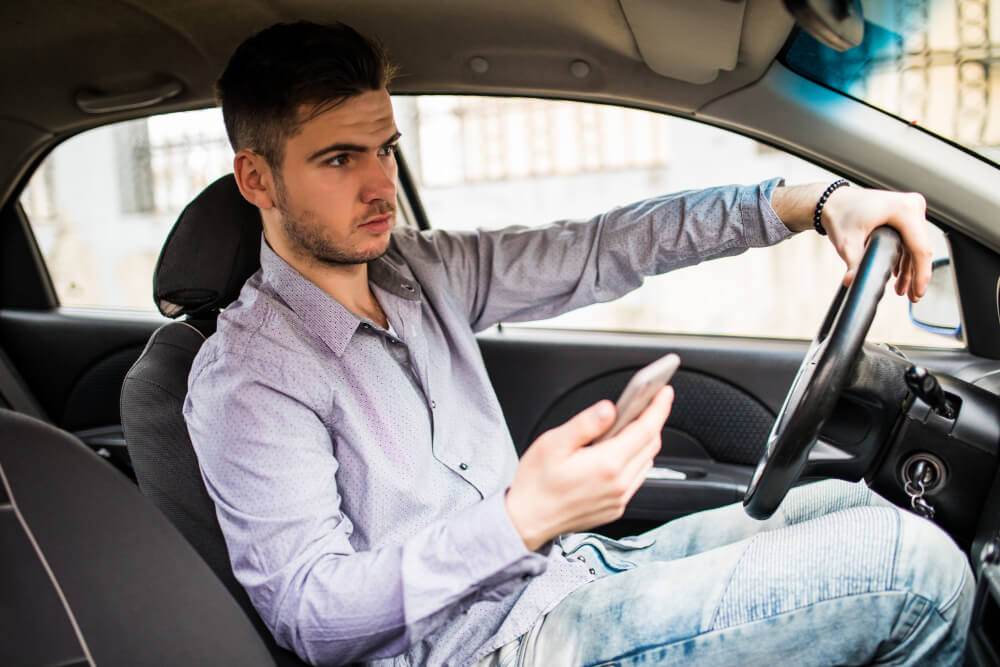
In nearly every state, yes, though the details vary. Under a texting-only ban, a driver can still legally scroll social media or browse the web while driving, since the law technically only restricts composing or reading a text, which is part of why many states have moved toward broader restrictions.
Hands-Free Driving Laws
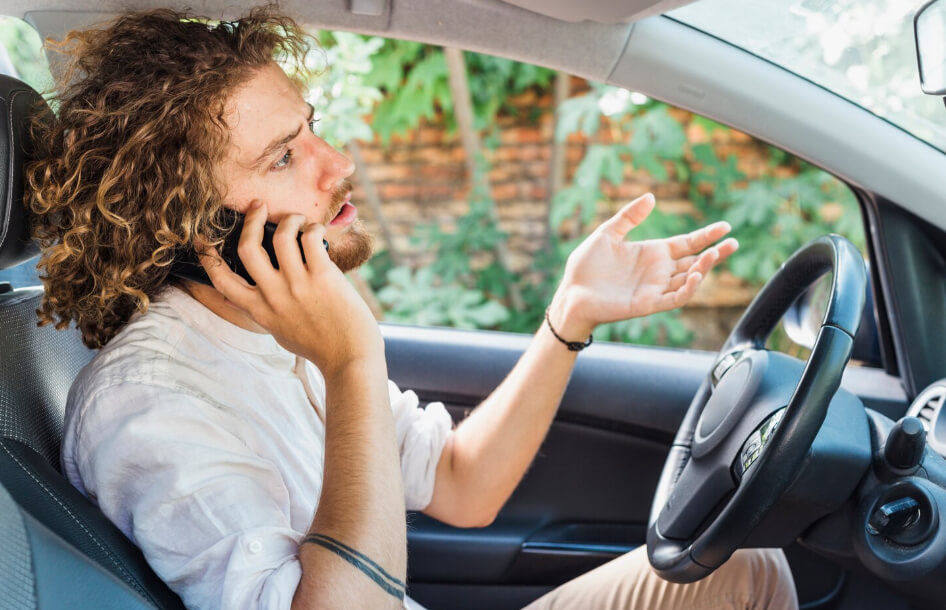
Hands-free laws go further than texting bans. Rather than only prohibiting texting, a hands-free law bars a driver from holding or manually operating a phone at all, covering calls, browsing, and app use. As of 2026, 33 states, the District of Columbia, and several U.S. territories have adopted a handheld ban. Texas, for example, still runs a narrower texting ban statewide, with handheld restrictions limited to school zones and drivers under 18, a gap state lawmakers have been trying to close.
Texting While Driving Penalties
Penalties differ by state and by how many prior offenses a driver has on record. They typically range from a modest first-offense fine up to steeper fines, license points, and in some states a suspended license after repeat violations. Because these numbers shift as laws get updated, check your state’s DMV or a source like the Governors Highway Safety Association for the current figures where you drive.
How to Stop Texting and Driving
01
Put Your Phone Away Before Driving
Out of reach beats out of sight. A phone in a bag or glovebox removes the temptation entirely, instead of relying on willpower every time it buzzes.
02
Turn On Do Not Disturb or Driving Mode
Most phones already have a driving mode built in. Turning it on before pulling out of the driveway means one less decision to make once the car's moving.
03
Use Hands-Free Features Responsibly
Hands-free isn't the same as distraction-free. A voice-to-text message still pulls cognitive attention away from the road, even with both hands on the wheel.
04
Set Up Navigation Before You Start Driving
Punching in an address at a red light still counts as distracted driving. Set the route before leaving, not after merging onto the highway.
05
Ask Passengers to Handle Your Phone
If someone else is in the car, let them read a text out loud or send a reply. It's a small habit that removes the pull to check it yourself.
06
Use an App That Prevents Phone Distraction
Willpower runs out. An app that automatically limits phone use once the car starts moving doesn't.
How to Prevent Distracted Driving
Texting is one piece of a bigger problem. Eating behind the wheel, adjusting navigation mid-drive, digging through a bag for something, managing a backseat argument: all of it pulls focus the same way a text does, just less obviously.
Preparation cuts a lot of this off before it starts. Food eaten before the drive, a route set in advance, a car cleared of anything that needs digging through while moving. What’s left after that is mostly phone-related, and phone-related distraction is exactly where technology can step in and hold the line a driver might not hold on their own.
Texting and Driving Apps: Can Technology Help Prevent Distracted Driving?
How Do Apps Prevent Texting While Driving?
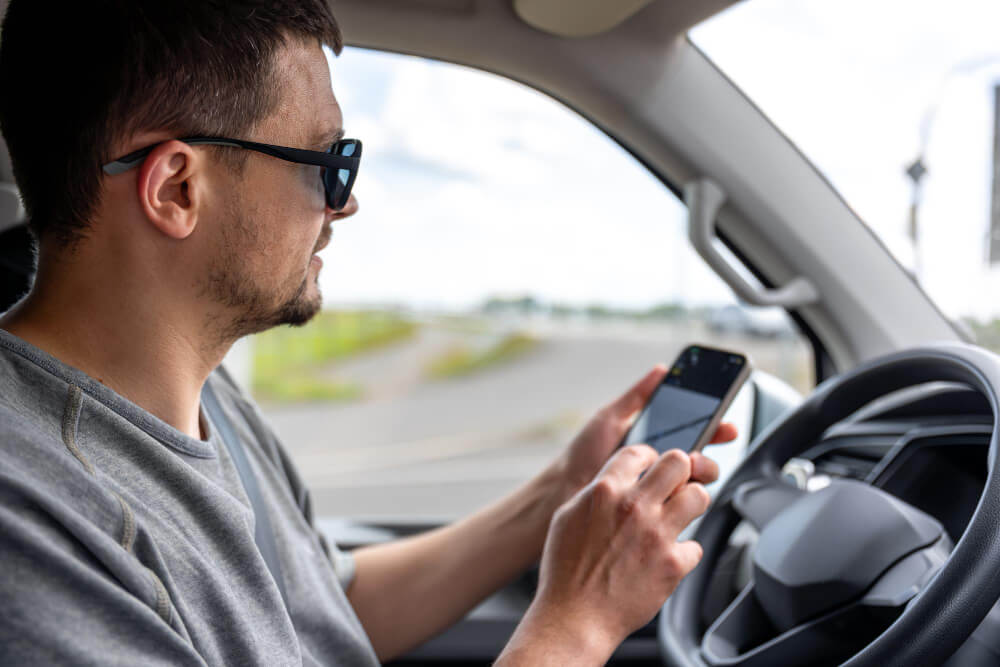
A driving-safety app typically works by detecting when the vehicle is in motion and limiting phone interaction automatically from there. That can mean holding notifications, restricting certain apps, or sending an automatic reply to anyone who texts mid-drive.
The value is in the automation. A driver doesn’t have to remember to turn anything on. The app already knows the car is moving.
A Smarter Way to Prevent Texting and Driving
A driver can’t out-willpower a phone lighting up on the passenger seat forever. Eventually, curiosity wins, even for someone who knows better.
My Drive Guardian closes that gap. It detects when a vehicle is moving and steps in automatically, so safer driving doesn’t depend on remembering to make the right call every single trip.
Help Drivers Stay Focused
We hold back notifications, texts, and calls while the vehicle is in motion, so there's nothing pulling attention away from the road in the first place.
Reduce Distracted Driving Across Your Fleet
For businesses running multiple vehicles, We give fleet managers visibility into phone use patterns across drivers, not just a single car.
Encourage Safer Driving Behaviour
Reports turn a vague safety reminder into a specific one. A manager or parent can point to an actual pattern instead of a general warning.
Monitor and Improve Driver Safety
Trip-level data shows where distraction is actually happening, which makes it possible to coach around the real problem instead of guessing.
See How My Drive Guardian Can Help Reduce Distracted Driving
Texting While Driving vs. Other Forms of Distracted Driving
Type of Distraction | Example |
Visual | Looking at a phone |
Manual | Typing a text |
Cognitive | Thinking about a message |
Auditory | Responding to a notification |
Passenger | Talking or interacting with someone in the car |
Navigation | Adjusting GPS mid-drive |
Texting stands out because it’s the only common distraction that hits visual, manual, and cognitive attention all at once.
FAQ
Frequently Asked Questions About Texting and Driving
Why is texting while driving dangerous?
It pulls visual, manual, and cognitive attention away from the road at the same time, which slows reaction time and raises crash risk more than most other distractions.
What are the dangers of texting and driving?
Missed hazards, delayed braking, lane drift, and a significantly higher chance of a crash, on top of the legal and financial fallout if one happens.
Is texting and driving illegal?
In nearly every state, yes, though the scope of the ban varies. Some states restrict texting only. Others, through hands-free laws, restrict holding a phone at all.
What are the texting and driving laws by state?
They differ state to state, from texting-only bans to full handheld restrictions. Check your state DMV or the Governors Highway Safety Association for current rules where you drive.
How can I stop texting while driving?
Put the phone out of reach before driving, turn on a driving mode, prep navigation in advance, and let an app handle the rest automatically.
How can I prevent distracted driving?
Handle food, navigation, and anything that needs digging through before the car starts moving. For phone-related distraction specifically, an app like My Drive Guardian removes the temptation instead of relying on willpower.
Are there apps that prevent texting and driving?
Yes. My Drive Guardian detects when a vehicle is moving and automatically limits phone use, without requiring the driver to turn anything on manually.
What are the penalties for texting while driving?
They vary by state and by how many prior offenses a driver has, ranging from fines to license points to suspension after repeat violations.
Help Prevent Texting and Driving
A text can wait. A crash can’t be undone. Understanding the risks, knowing the laws, and using technology built to reduce phone distraction are three ways drivers and businesses can actually move the needle on this.
Explore Drive Guardian’s Driver Safety Solutions