- Reduce Distracted Driving Risk
Auto Risk Management Solutions for Safer Drivers
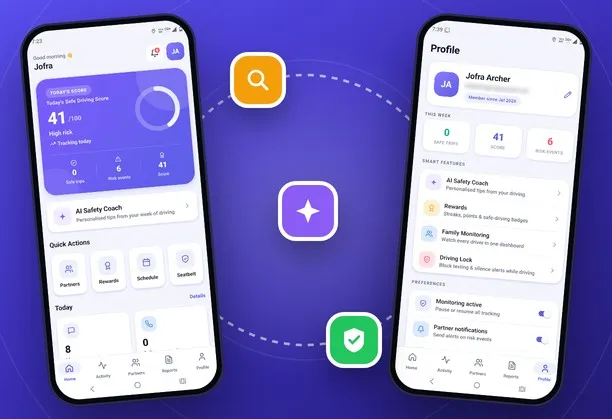
Managing driving risks takes more than reacting after an incident. It means setting clear safety expectations, helping drivers build safer habits, and choosing technology that supports better decisions. My Drive Guardian helps businesses stay connected with employees and fleet drivers through free GPS location tracking and fleet tracking on both iOS and Android. All base features are free and include access to a desktop tracking page and group invitations. Android users can also access driving scores, driving behavior tracking, and the AI Safety Coach. No additional in-vehicle hardware is needed.
How Distracted Driving Risk Affects Insurance Claims and Underwriting
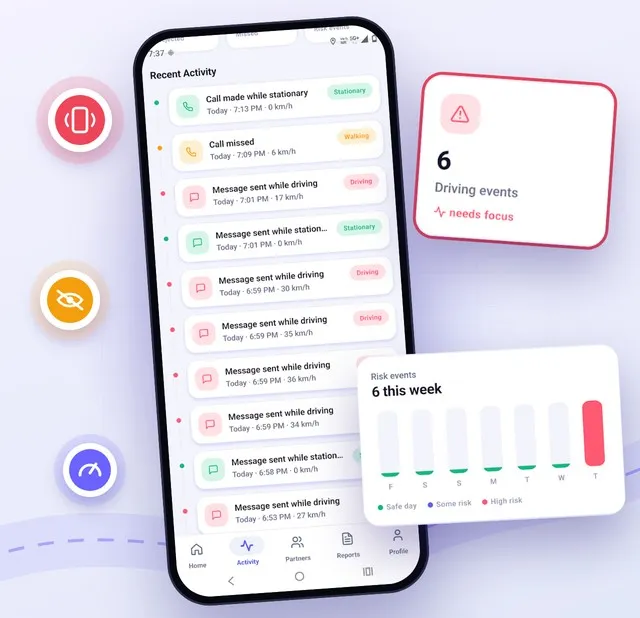
Distracted driving can contribute to collisions, claims costs, and operational disruption. Repeated claims may lead to more intensive underwriting assessment by insurers. For fleets, mishaps can also involve vehicle repairs, missed schedules, and more pressure to reassess driver safety protocols.
This is why distracted driving insurance is not simply about the behavior of a particular driver but is a broader question of risk management. Fleets need practical strategies to promote safer driving, and insurers require reliable data to quantify exposure.
Insurance telematics can provide insight into driving patterns. Depending on the system, it may record mileage, braking, acceleration, or other vehicle information. Some tools also offer driver distraction monitoring, but capabilities vary. Driving data should be interpreted in context rather than treated as automatic proof of what caused a crash.
How Telematics Insurance and Usage-Based Insurance Work
Telematics insurance uses information collected through an in-vehicle device, a connected vehicle, or a mobile application to help assess driving patterns. Usage-based insurance (UBI) gathers data such as mileage, driving time, location, acceleration, and braking to help insurers determine how a vehicle is utilized.
A usage-based insurance telematics program may help an insurer understand driving patterns that a traditional claims history cannot show on its own. Depending on the program, this information may contribute to pricing or other insurance decisions.
But the data need to be interpreted in context. For example, a hard-braking occurrence does not imply that a motorist was irresponsible. Road conditions, traffic, and the nature of the journey can count. For this reason, telematics can support driving risk management, but it should not be treated as a complete explanation of every incident or a guarantee of safer driving.
Connected Car Insurance: Where Vehicle Data Has Limitations
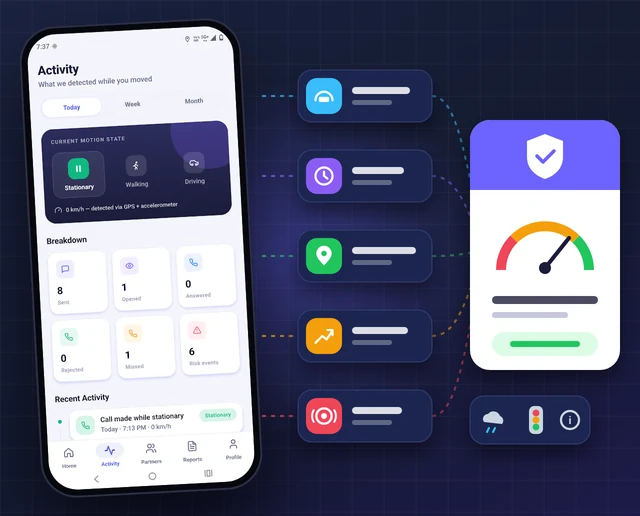
Connected car insurance uses information from a vehicle’s connected systems or related technology to help assess vehicle use and driving patterns. The information available depends on the vehicle, device, and insurance program. Some systems provide mileage and driving data, while others can capture additional vehicle information. It is important not to assume that every insurance telematics solution records phone use or identifies distraction.
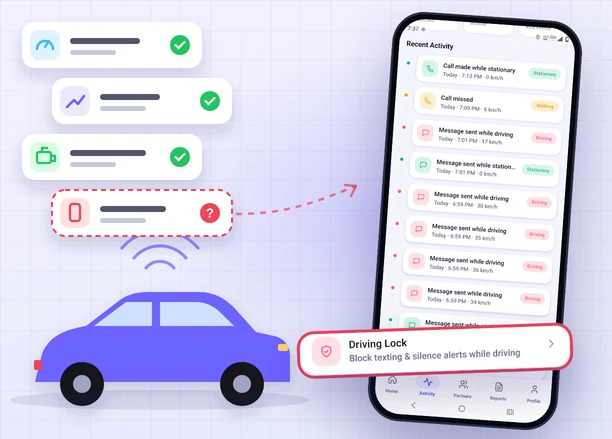
Connected vehicle data can help insurers understand certain patterns, but monitoring does not necessarily intervene when a risk arises. A broader auto risk management strategy should consider both the information a system provides and the safeguards available to address specific risks.
Distracted Driving Detection: What Monitoring Can and Cannot Do
Distracted driving solutions use different approaches, including phone-based data, in-cab cameras, or vehicle information. Some distracted driving detection systems can flag potential phone use or other indicators of distraction, while others focus on general driving behavior.
This information may support driver coaching, internal safety reviews, or underwriting assessments where the data is relevant and appropriate. However, detection is not the same as prevention. Capabilities vary, and a flagged event may require further context before conclusions are drawn.
Distracted driving technology should therefore be evaluated according to the risk it is designed to address. Phone-focused monitoring addresses a different concern from alcohol detection before ignition. Neither should be presented as a replacement for the other.
How to Prevent Distracted Driving: A Three-Layer Approach
No single tool answers how to prevent distracted driving. Strong programs stack three layers:
- Detection: Some dedicated systems can flag potential risky behaviour for further review or coaching. Their capabilities vary, and flagged events need to be assessed in context.
- Accountability: Clear policies and regular driver training establish expectations and help businesses reinforce responsible driving habits.
- Technology: Appropriate tracking and driver-support tools can contribute to a wider safety programme, but they should be selected according to the specific risks they address. They cannot replace clear policies, training or responsible driving.
These measures work best when they support one another. Technology can provide useful information, while policies and training help drivers understand the behaviours expected of them.
Technology is most useful when it addresses a clearly defined risk. For distracted driving, that may include phone-use restrictions, monitoring tools and consistent driver education. No single technology can eliminate every source of distraction, so organizations should combine suitable tools with practical safety policies.
Planning how to reduce distracted driving across a program means asking a harder question than “can we detect it?” Ask “can we prevent it?” Then build toward that answer, not just a bigger dashboard.
What My Drive Guardian Adds to Driver Risk Management
My Drive Guardian provides businesses with free base tracking features to stay connected with employees and fleet drivers. GPS location tracking and fleet tracking are available on both iOS and Android, with a desktop tracking page and group invitations also included.
Free GPS Location Tracking
Stay informed about connected employees and drivers through GPS location information available in the mobile app.
Free Fleet Tracking on iOS and Android
Businesses can use fleet tracking on either platform to view connected drivers' locations and manage their driver groups through the app.
Free Desktop Tracking Page
The desktop tracking page gives fleet managers another way to access connected driver location information from a computer, making it convenient to view their teams on a larger screen.
Free Group Invitations
Bring employees and drivers into a group using an invitation code, shareable link, or QR code.
Additional Android Driving Features
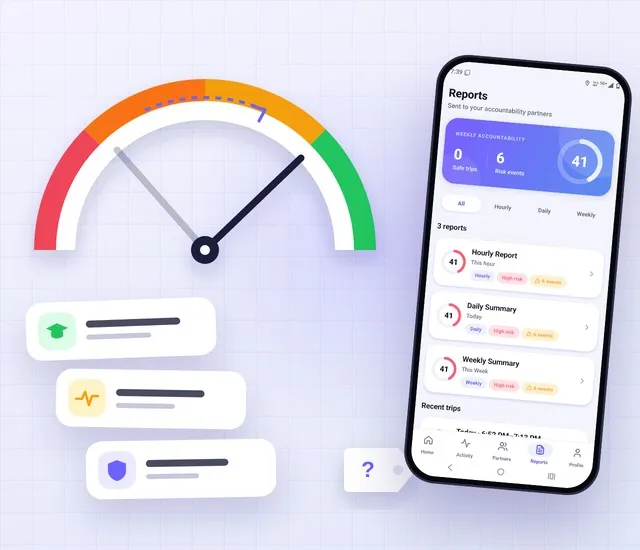
Android users can access driving scores and driving behavior tracking. These features provide additional information that can support conversations about driving practices and safer habits.
Android AI Safety Coach
The AI Safety Coach offers Android users additional driving-related guidance to support greater awareness of their driving habits.
These features can complement a wider driver risk management approach involving employee communication, driver training, and consistent workplace safety policies. They do not detect texting or phone handling, or replace dedicated distracted-driving detection systems.
High-Risk Drivers Insurance: Why the Right Safeguards Matter
High risk drivers insurance may be available to drivers with a claims history or other underwriting factors outside the preferred risk profile of an insurer. The criteria and choices will be different by insurer, policy and jurisdiction. These drivers may welcome a sensible safety plan. And depending on the circumstances, it could involve training, clearer expectations of driving behavior, appropriate monitoring, and safeguards to reduce specific dangers.
Prevention technology can form part of that plan, but installing a device does not automatically change a driver’s risk classification, guarantee policy approval, or reduce premiums. Any impact on underwriting or renewal decisions depends on the insurer’s requirements and how it evaluates the available information. A measured approach gives drivers, fleet managers, and insurers a clearer basis for discussing which safety measures are in place and what further steps may be appropriate.
Choosing Driver Monitoring Tools for Different Risks
Not every monitoring system is designed to address the same problem. Some tools help insurers assess vehicle usage, while fleet managers may need solutions that support employee oversight and responsible phone use.
Before choosing a system, consider what information it collects, whether that information is relevant to your safety objectives and how it will be used. Clear expectations around privacy, access and data handling are also important when monitoring employees.
How Phone-Based Tools Can Complement Insurance Telematics
Insurance telematics and phone-based tools serve different purposes. Telematics may help insurers understand vehicle use and driving patterns, while phone-based tools can offer features such as location tracking or, depending on the product, phone-use information. My Drive Guardian provides GPS location tracking and Android-specific driving insights, but it does not replace dedicated insurance telematics or provide vehicle-level risk prevention.
Frequently Asked Questions
Q: How to reduce distracted driving risks?
Set clear phone-use rules, prepare navigation before driving, and avoid handling messages while moving. Driver training, consistent policies, and suitable phone-focused technology can support these habits.
Q: What are the best ways to reduce driver distractions?
Reduce unnecessary notifications, keep phones out of reach, set navigation before departure, and ask passengers to handle tasks when appropriate. Fleets should reinforce these habits through clear policies and regular coaching.
Q: How to avoid distractions while driving?
Turn off any unnecessary notifications, plan your route before you go and keep your eyes on the road. If you need to send or receive a message, pull over and park somewhere secure, and then use your phone.
Q: What causes distracted driving?
Common causes include texting, phone calls, adjusting navigation, eating, interacting with passengers, and focusing on activities unrelated to driving. Distraction can be visual, manual, or cognitive.
Q: How does distracted driving affect road safety?
Distraction can take a driver’s eyes, hands, or attention away from driving. This can make it harder to notice hazards, judge changing conditions, and respond promptly to events on the road.
Q: How to stop using your phone while driving?
Silence unnecessary notifications, set your navigation before departure and place your phone somewhere you cannot easily reach while driving. If you need to make a call or respond to a message, pull over and park safely first.
Q: How can technology help prevent distracted driving?
Technology can support safer driving through driver education tools, location tracking and systems designed to address specific risks. Dedicated monitoring systems may also provide driver distraction alerts or in-vehicle monitoring, depending on their capabilities. My Drive Guardian provides GPS location tracking on iOS and Android, while Android users can also access driving scores, driving behaviour tracking and the AI Safety Coach. These features can support a wider driver safety approach, but they do not detect distracted driving or replace driver training and clear phone-use policies.
Q: How to improve driver safety awareness?
Provide regular training, explain safety policies clearly, and use fair coaching to reinforce safer habits. Review available driving information in context rather than concluding from a single event.
Q: What are the best ways to reduce driver distractions across a fleet?
Set a clear policy on phone use, explain expectations to drivers, and review safety concerns regularly. Fleet managers can reinforce these practices through driver training, consistent communication and suitable technology. Any monitoring information should be assessed in context rather than treated as automatic proof of unsafe driving.
Build a More Proactive Auto Risk Management Strategy
Give your business another way to stay connected with employees and fleet drivers. My Drive Guardian includes free GPS location tracking and fleet tracking on iOS and Android, along with desktop access and group invitations. Android users can also use driving scores, driving behaviour tracking and the AI Safety Coach. All base features are free, with no additional in-vehicle hardware required.