
- Commercial Driver Phone Policy
Driver Camera System for Safer Commercial Driving
A driver looks down to dial a phone while travelling at 55 miles per hour. In the 3.8 seconds their eyes are off the road, the vehicle travels around 306 feet – roughly the length of a football field. Federal Motor Carrier Safety Administration (FMCSA) research found that commercial motor vehicle (CMV) drivers who dial a mobile phone while driving are six times more likely to be involved in a safety-critical event than drivers who don’t. That’s one reason federal rules restrict hand-held phone use behind the wheel.
Every fleet operating commercial vehicles needs a distracted driving policy for employees that goes beyond a line in the handbook. This guide explains federal phone-use restrictions, what a company driver safety policy should cover, and how businesses can encourage safer habits through clear rules, training, and appropriate monitoring tools.
What Federal Law Actually Says
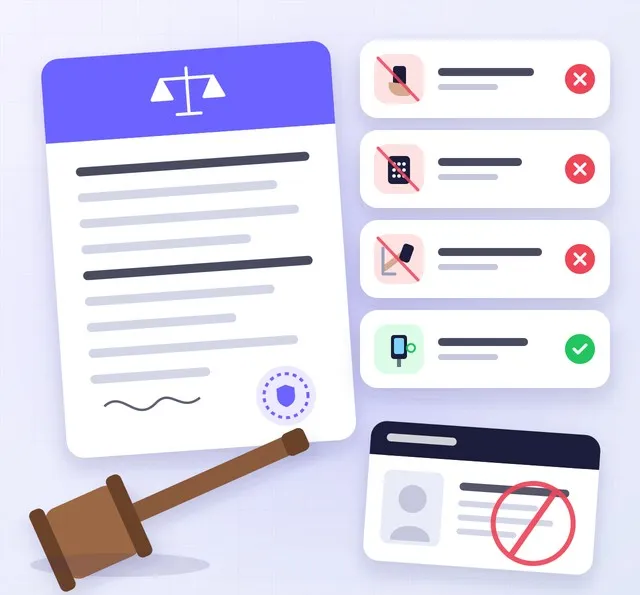
The DOT cell phone policy for commercial drivers isn’t a suggestion. It’s a regulation with real penalties attached.
Under Federal Motor Carrier Safety Regulations, the FMCSA restricts hand-held mobile telephone use for drivers operating commercial motor vehicles, with a disqualification penalty for CDL holders who violate a hand-held phone law while driving a CMV. The rule defines “use” broadly. It covers holding a phone to talk with at least one hand, dialing or answering by pressing more than a single button, or reaching for a phone in a way that takes the driver out of a seated, belted driving position.
This isn’t just about texting. The regulations prohibit texting, emailing, instant messaging, browsing web pages, and any multi-button communication while the vehicle is in motion. Hands-free devices are allowed, but only when they’re located within easy reach of the driver.
FMCSA Cell Phone Policy: The Details That Matter
The FMCSA cell phone policy applies specifically to drivers operating a commercial motor vehicle, not to every mile a CDL holder ever drives. CDL holders are subject to the federal rule only when they’re actually driving a CMV, not any vehicle they happen to be operating.
The penalties aren’t small. Drivers who violate the restrictions can face federal civil penalties of up to $2,750 per offense, while motor carriers that allow or require prohibited phone use can face penalties of up to $11,000. Repeat violations can also lead to disqualification from operating a commercial motor vehicle. Under the federal rules, a second disqualifying conviction can result in a 60-day disqualification, while a third can result in 120 days.
That last part is the one fleet managers underestimate most. Motor carriers also have responsibilities. They must not allow or require drivers to use hand-held mobile phones or text while operating a CMV. A clear written policy, driver training, and consistent enforcement can help a company communicate its expectations and demonstrate how it addresses distracted driving risks.
Does the Law Require a Written Company Policy?
Here’s a detail that surprises a lot of fleet managers: the federal rule doesn’t actually require motor carriers to have a written company policy or training program. What it does require is that employers not allow or require drivers to use hand-held mobile phones while operating a CMV. Precision Machined Products AssociationPrecision Machined Products Association
Technically, that means a business could comply without ever putting anything in writing. In practice, that’s a bad idea. Without a documented driver cell phone policy, a company has no record showing drivers were trained, no proof of enforcement, and no paper trail if an accident investigation or insurance claim ever asks for one. A company distracted driving policy in writing isn’t just about meeting the legal floor. It’s about proving you did, months or years after the fact.
What a Real Distracted Driving Policy for Employees Should Cover
A distracted driving policy for employees that actually holds up needs to go beyond copying the federal rule word for word. It should spell out exactly what’s expected, in language a driver can’t misread.
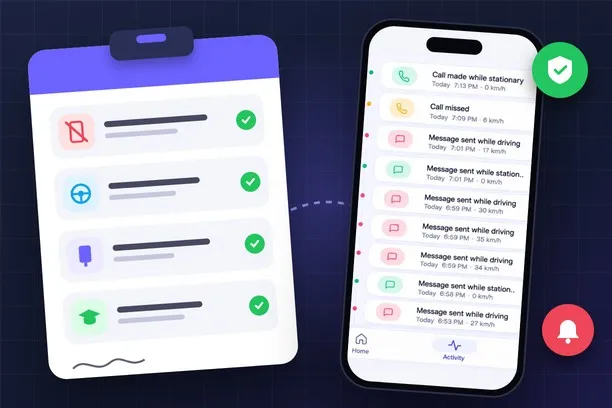
At minimum, it should define what counts as hand-held use, matching the federal standard of dialing, holding, or reaching for a phone. It should state clearly that hands-free devices are the only acceptable option while driving, and only when mounted or positioned within easy reach. It should explain the consequences of a violation, both the federal penalties and any internal disciplinary steps. And it should require drivers to acknowledge the policy in writing, so there’s no question later about whether they knew the rules.
A strong cell phone policy while driving doesn’t just protect the company from liability. It gives drivers a clear, consistent standard instead of a vague expectation to “be careful.”
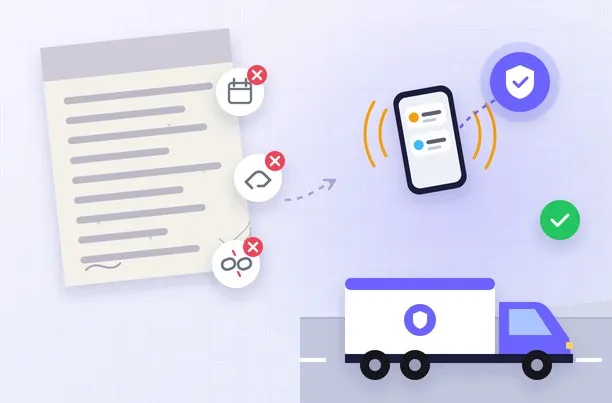
Truck Driver Cell Phone Policy: Common Gaps
Most truck driver cell phone policy documents fail in the same few places.
They’re written once and never updated, even as fleet technology and driver safety practices change. They get handed out during onboarding and never mentioned again. And most importantly, they have no real enforcement mechanism behind them beyond trusting the driver to follow the rule. A policy that only exists on paper doesn’t reduce risk. It just creates a document to point to after something’s already gone wrong.
Commercial vehicle distracted driving incidents rarely happen because a driver didn’t know the rule. They happen because there was no system in place to reinforce it at the moment, when a phone buzzes on a long, boring stretch of highway. Even the best driver assist features can’t replace that.
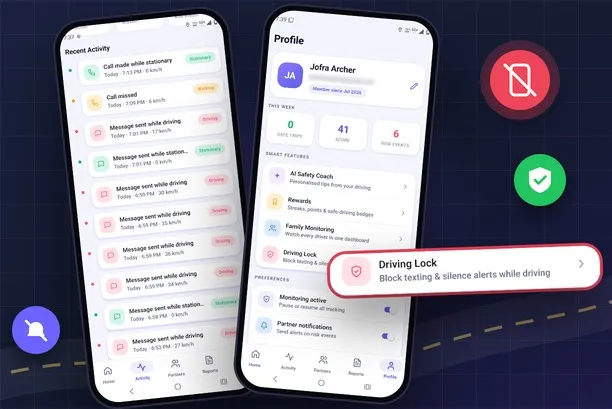
Cell Phone Use While Driving Policy: Why Enforcement Is the Hard Part
Writing a cell phone use while driving policy is the easy half. Enforcing it consistently, across every driver and every route, is where most companies actually struggle.
A manager can’t ride in every truck. Even advanced driver assistance systems cannot prevent every form of distraction or make a driver put their phone down, and random spot checks catch a small fraction of violations. By the time a citation or an accident report reveals a pattern, the damage is already done. This is the gap between having a company cell phone policy while driving on paper and actually knowing whether it’s being followed on the road.
How My Drive Guardian Supports Your Driver Safety Policy
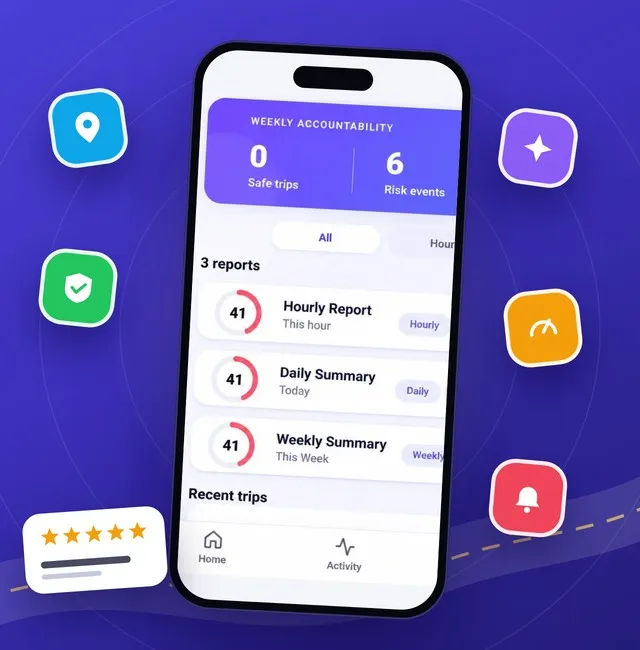
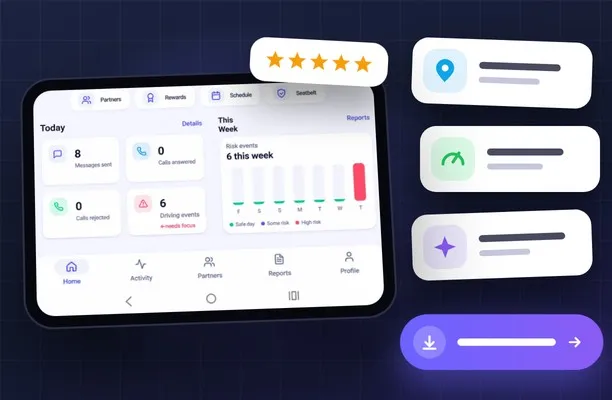
My Drive Guardian gives businesses a way to stay connected with employees and fleet drivers through free GPS and fleet tracking. Its base features are available on both iOS and Android, with a desktop tracking page and group invitations also included. No additional in-vehicle hardware is needed.
01
Free GPS Location Tracking
Stay informed about connected employees and drivers through GPS location information available in the mobile app.
02
Free GPS Location Tracking
Stay informed about connected employees and drivers through GPS location information available in the mobile app.
03
Free GPS Location Tracking
Stay informed about connected employees and drivers through GPS location information available in the mobile app.
04
Free Group Invitations
Bring employees and drivers into a group using an invitation code, link, or QR code.
05
Additional Android Driving Features
Android users can access driving scores and driving behavior tracking. These features provide additional information that can support conversations about driving practices and workplace safety.
06
Android AI Safety Coach
The AI Safety Coach offers Android users additional driving-related guidance to support safer everyday driving habits.
These features can complement a company’s distracted driving policy, driver training, and workplace safety procedures. They do not detect texting or phone handling, or enforce a company’s phone-use rules.
Frequently Asked Questions
Q: What is a driver phone policy?
A driver phone policy is a written set of rules for how employees may use phones while driving for work. It defines prohibited use, allowed hands-free options, consequences for violations, and requires drivers to acknowledge it in writing.
Q: Can truck drivers use phones?
Yes, but there are limits. Drivers must be able to answer, make, or end a call using a single button press, with the phone close enough to reach while remaining seated and properly restrained by a seat belt. Reaching unsafely for a phone or holding it while driving is prohibited.
Q: Can truck drivers text while driving?
No. FMCSA prohibits commercial drivers from manually entering text into or reading text from an electronic device while operating a CMV. This includes text messages, emails, instant messages, and commands to access web pages. Drivers should stop in a safe location before using these functions.
Q: Are hands-free phones allowed?
Yes, with limits. A driver may use an earpiece or speakerphone, and the phone must sit within easy reach so the driver needs no more than a single button press and never has to leave a seated, belted position.
Q: What are FMCSA phone rules?
FMCSA prohibits texting and hand-held phone use while driving a commercial motor vehicle. Employers also may not allow or require drivers to break these rules. Violations can bring civil penalties and, for repeat offenses, CDL disqualification.
Q: Can truck drivers use Bluetooth?
Yes, if the connection lets the driver answer or dial with a single button press and the device stays within easy reach. Hands-free still isn’t distraction-free, so many fleets limit call length and avoid stressful conversations while driving.
Q: Can employers ban phone use?
Yes. Employers can set rules stricter than federal law, including a full ban on phone use while a vehicle is moving. Put the rule in writing, train drivers, and have them sign it so the policy is clear and enforceable.
Q: How do phone policies improve safety?
A clear policy gives drivers consistent expectations, supports training, and helps employers address prohibited phone use. Regular communication and consistent enforcement can reinforce safer habits and make responsibilities clear. Phone-based tools may provide additional support, but they do not replace a written policy, driver training, or supervision.
Turn Your Fleet Safety Policy Into a System That Works
A clear fleet safety policy helps drivers understand their responsibilities and encourages safer habits on the road. Build a stronger approach with practical safety measures, consistent training, and tools that support better workplace driving practices.