A company driver checking a message at a stoplight may seem like a small moment. A driver answering a work call, reading a dispatch message, or changing a route while the vehicle is moving can create a much bigger safety problem.
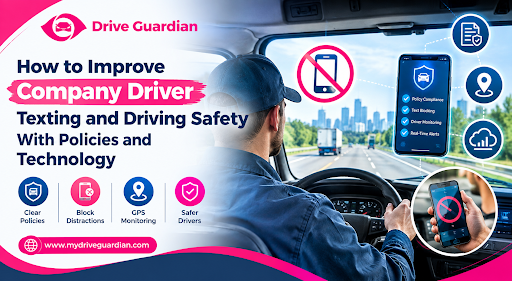
For businesses, company driver texting and driving safety is not just about reminding employees to put their phones away. It requires clear expectations, practical procedures, driver training, and technology that supports those expectations.
That matters whether employees drive company vehicles, visit customers throughout the day, or use personal vehicles for work. My Drive Guardian takes a vehicle-connected approach to safety, showing how technology can become part of a broader strategy rather than relying on reminders alone.
According to the Federal Motor Carrier Safety Administration (FMCSA), distracted driving claimed 3,208 lives and injured more than 315,000 people in the U.S. in 2024.
Key Takeaways
- Company driver texting and driving safety starts with clear rules that tell employees exactly when and how they can use phones and other devices.
- A practical texting while driving policy should cover phone use, work communications, navigation, emergencies, and expectations around responding to messages.
- Businesses should avoid creating work processes that pressure drivers to respond while they are behind the wheel.
- Fleet driver safety works best when policies, driver training, vehicle procedures, and appropriate technology work together.
- Distracted driving technology can reduce certain interruptions or provide safety-related information, but it does not replace driver attention.
- Vehicle-connected technology can add safety features and information that a phone-only solution may not provide.
- Regularly reviewing policies and workplace communication practices can help businesses identify safety gaps and improve their driving procedures.
- The right technology should support safer driving without creating additional distractions or unnecessary interaction.
Why Company Driver Texting and Driving Safety Needs More Than a Reminder
“Don’t text and drive” is an important message, but a workplace safety program needs to go further.
Employees may receive calls, texts, emails, navigation updates, customer requests, dispatch instructions, or other notifications during a workday. If a company expects drivers to respond immediately, even an otherwise strong safety policy can create conflicting expectations.
The Occupational Safety and Health Administration (OSHA) recommends that employers review their procedures to make sure work processes are not contributing to distracted driving. It specifically notes that dispatching and rerouting systems can create visual, manual, and cognitive distractions.
A practical approach is therefore to make the safe choice the expected choice:
- Drivers should not be expected to text while driving.
- Work communications should be handled before driving, after parking, or through appropriate hands-free systems.
- Routes and destinations should be set before the vehicle is moving.
- Drivers should know whom to contact if an urgent work issue arises.
- Supervisors should avoid creating pressure for immediate responses while someone is driving.
- Safety expectations should apply consistently across roles and vehicles.
This is where company driver safety becomes a management issue as well as a driver issue.
What Should a Workplace Texting While Driving Policy Include?
A useful texting while driving policy should be specific enough that employees understand exactly what is expected.
Simply telling “employees should drive safely” leaves too much to interpretation. Instead, businesses can establish clear rules covering phone use, messaging, calls, navigation, and other electronic devices.
A policy may address:
Phone Use
State clearly whether employees are prohibited from holding or manually operating a phone while driving. The policy should also explain when employees may safely use a device, such as while parked in a legal and safe location.
For covered commercial motor vehicle (CMV) drivers, federal rules are more specific. FMCSA prohibits texting while operating a CMV and restricts the use of hand-held mobile phones.
Work Communications
Employees should not feel that they have to choose between following a safety policy and responding immediately to a manager or customer.
Businesses can establish procedures such as:
- Calls and messages should wait until the driver is safely parked.
- Non-urgent communications should not require an immediate response.
- Dispatch procedures should minimize unnecessary interaction while a vehicle is moving.
- Managers should understand that a delayed response may simply mean the employee is driving.
Navigation
Drivers should set destinations and review routes before starting the trip. If you are in the middle of a drive and need to change a route, the driver should pull over safely first before engaging the device.
Emergencies
The policy should explain what employees should do when they believe a situation requires immediate attention. The goal is to give drivers a clear process rather than leaving them to make decisions while moving.
How Can Businesses Build a Stronger Distracted Driving Policy?
A distracted driving policy works better when it becomes part of the company’s overall safety culture.
OSHA recommends that employers develop, communicate, maintain, review, and update written vehicle safety policies based on workplace risks and applicable laws. It also recommends involving drivers in the development and review of those policies.
That creates several practical opportunities for businesses.
Start with the actual risks.
Consider how employees use vehicles, what devices they carry, how often they communicate with customers or dispatchers, and what types of roads they typically drive.
Make expectations easy to understand.
A policy should not compel employees to read complicated text while they’re trying to comply.
Train employees regularly.
Distracted-driving expectations should be included in onboarding and reinforced through periodic training.
Review business processes.
If drivers are constantly being asked to respond to messages, update records or change routes on the move, the fault might be in the workflow itself.
Apply the policy consistently.
Managers and drivers should be held to the same basic safety expectations.
The goal is not simply to create a document that employees sign. The goal is to create procedures that make safer behavior practical during a normal workday.
Technology Can Support Fleet Driver Safety, But It Should Not Replace Policy
Technology can add another layer to a company’s safety strategy.
For example, phone-based features can reduce notifications or support hands-free functions. Vehicle-connected systems can provide information about the vehicle, trips, or selected driving conditions. Other technologies may provide alerts or information about specific driving behaviors.
The important distinction is that technology should support fleet driver safety rather than become an excuse to rely on technology alone.
A driver still requires to pay attention and focus on the road. A monitoring system does not make texting safe, and a hands-free system does not remove every form of cognitive distraction.
Businesses should therefore think about technology in combination with:
- Written safety policies
- Driver training
- Clear communication procedures
- Vehicle maintenance
- Safe scheduling and workloads
- Appropriate technology
- Regular policy reviews
This layered approach is more practical than expecting one app, device, or feature to solve every driving risk.
What Role Can Vehicle-Connected Technology Play?
A phone can help with navigation, communication, and safety features, but it’s only one piece of the driving environment. Vehicle-connected technology adds another layer by tying safety features directly into the car itself.
For example, My Drive Guardian combines vehicle-level alcohol detection and ignition protection with connected features such as safety notifications, vehicle location, driver status, and trip history.
That approach addresses safety concerns that go beyond phone interaction. Depending on the needs of a business or driver, vehicle-connected technology can complement a company’s broader safety procedures by providing additional information around the vehicle and its use.
It is important, however, to match technology to the actual safety problem. A company primarily concerned about phone distractions may need different tools from a business focused on vehicle access, impaired driving, or family visibility.
How Can Companies Encourage Safer Driving Without Micromanaging Drivers?
A strong safety program should give drivers clear boundaries without making every trip feel like constant supervision.
One useful principle is to focus on behaviors and procedures, not simply surveillance.
For example, instead of telling employees to “be careful,” a company can establish clear expectations:
Before the trip:
Set navigation, secure necessary equipment, check the vehicle, and review important information before moving.
During the trip:
Keep your focus on the road, stay off your phone while you’re driving, and save any non-urgent messages for when you’re safely parked.
When something changes:
Concentrate on the drive, don’t use the phone manually, and just deal with non-essential conversations after safely parked.
After the trip:
If a customer, dispatcher, or manager receives an urgent communication, the driver should have a clear mechanism to securely respond at a later time.
This gives employees a practical framework rather than simply telling them to “pay attention.”
How Should Businesses Measure Company Driver Safety?
Not every safety program needs dozens of metrics. Businesses can start with a small set of useful questions:
| Area | Questions to consider |
| Policy | Do drivers understand the company’s phone-use rules? |
| Training | Are distracted-driving expectations covered during onboarding and refresher training? |
| Workload | Are drivers pressured to respond while operating vehicles? |
| Communication | Can employees safely handle customer and dispatch requests without driving distracted? |
| Technology | Does the technology support the safety policy or create additional interaction? |
| Vehicle safety | Are vehicles maintained and operated according to company procedures? |
| Review | Does management frequently assess if the policy is still consistent with the actual driving conditions? |
For businesses with commercial motor vehicles, applicable federal, state, and local requirements should also be reviewed. FMCSA rules specifically address texting and handheld mobile-phone use for covered CMV drivers.
For other employees who drive for work, businesses should consider the laws and workplace requirements that apply to their particular operations.
Building a Safer Driving Culture Starts Before the Engine Turns On
Improving company driver texting and driving safety is not about finding one perfect piece of technology.
It starts with a simple principle: employees should never feel that completing a work task requires them to compromise their attention behind the wheel.
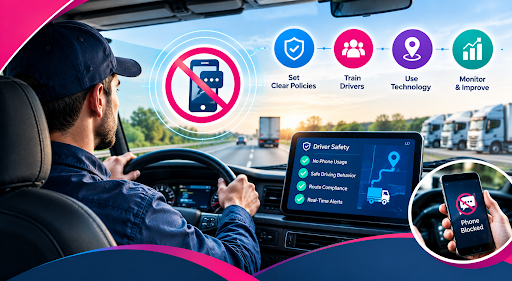
A clear texting while driving policy establishes the expectation. Driver training explains why it matters. Practical work procedures remove unnecessary pressure. Technology can then provide additional support where it makes sense.
My Drive Guardian can fit into that broader technology conversation by combining vehicle-connected safety features with information that can help families and other users stay informed. For companies looking at safety technologies, the main thing is to select the right tools for the unique vehicles, drivers, dangers, and operating needs of the company.
FAQs
Q: What is company driver texting and driving safety?
Company driver texting and driving safety refers to the policies, training, procedures, and technology businesses use to reduce texting and other forms of distracted driving among employees who drive for work.
Q: What should a texting while driving policy include?
A good workplace policy covers phone and device restrictions, what’s expected when it comes to calls and messages, how to use navigation, what to do in an emergency, and when it’s safe for drivers to use their devices. Requirements will vary depending on the type of vehicle and applicable legislation.
Q: Why is a distracted driving policy important for businesses?
A distracted driving policy tells employees exactly what’s expected of them, and it helps a business spot any work routines that might push drivers to use their devices on the road. OSHA advises employers to review how work gets done and put vehicle safety policies in writing, based on the risks of the job and any rules that apply.
Q: Can technology prevent employees from texting while driving?
Technology can reduce some distractions or provide alerts and other safety features, but it cannot ensure a driver’s attention. The best results come when technology is part of a full safety program, one that also includes clear policies, training, and the right procedures at work.
Q: How can companies improve fleet driver safety?
Companies can improve fleet driver safety by establishing clear driving policies, providing ongoing training, reviewing workloads and communication procedures, maintaining vehicles, and selecting appropriate technology that supports their specific safety goals. Businesses operating commercial motor vehicles should also understand the applicable FMCSA requirements.