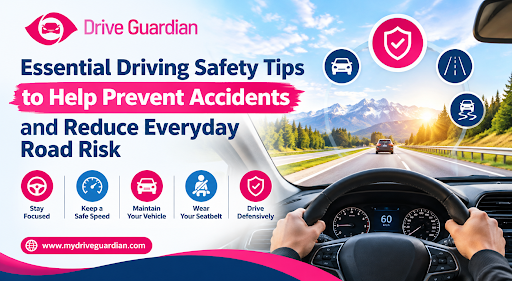
Drive defensively, keep your phone out of reach, wear your seat belt properly, stay sober and rested, use the three-second rule, and match your speed to the conditions.
Think about your last drive. Did you glance at a text at a red light, take a turn a little fast, or tell yourself you were “fine to drive” after a long day? Most of us have, and most of the time nothing happens. That’s exactly why risky habits stick. But NHTSA’s early estimate puts 2025 U.S. road deaths at 36,640, down from 39,254 in 2024, and that’s still about 100 lives every day. These driving safety tips are simple enough to use on your next trip. At My Drive Guardian, we build safety technology for families, and we’ve found that the best protection is good habits backed by smart tools.
Key Takeaways
- Defensive driving works: scan ahead and expect other drivers to make mistakes.
- Use the three-second rule: add more time in rain, at night, and in traffic.
- Remove distractions before you start: phone away, route set, snacks finished.
- Stay sober and rested: that includes some legal and prescription medications.
- Match speed to conditions: even the posted limit can be too fast.
- Maintain your car: tires, brakes, lights, and recalls all count.
What Are the Best Safe Driving Tips to Prevent Accidents?
Small habits, repeated on every trip, prevent the most crashes.
Practice Defensive Driving
Defensive driving is one of the most useful driving safety tips because it means assuming someone else may make a mistake and leaving yourself room to react. Look well ahead, check your mirrors often, cover the brake near intersections, and never assume another driver sees you.
Follow the Three-Second Rule
Pick a fixed object, like a sign. When the car ahead passes it, count “one-one-thousand, two-one-thousand, three-one-thousand.” If you reach the sign before you finish counting, you’re too close. Add time when conditions get worse:
| Conditions | Following distance |
| Normal driving conditions | At least 3 seconds |
| Rain, slippery roads, poor visibility or other difficult conditions | Increase your following distance |
| When following a motorcycle or a vehicle that blocks your view | Allow extra space |
Buckle Up the Right Way
Place the shoulder belt across the middle of your chest, away from your neck, and the lap belt across your hips, not your stomach. Never tuck the shoulder belt behind your back or under your arm.
Match Your Speed to the Conditions
One of the most practical road safety tips is to control your speed rather than simply watching the number on the speedometer. Speeding was involved in 29 percent of all traffic fatalities in 2024. According to the NHTSA, speeding increases both the likelihood of a crash and the severity of that crash. Drivers must also alter their speed for situations such as weather, visibility, traffic, and work zones.
How Can Drivers Avoid Distraction, Impairment, and Fatigue?
Remove Distractions Before You Start
Distraction-affected crashes killed 3,208 people in 2024. Distraction isn’t just texting. It also includes eating, adjusting the stereo or navigation, and talking with passengers. Set your route, choose your music, and put your phone out of reach before you shift out of park.
Never Drive Impaired
Alcohol-impaired crashes killed 12,429 people in 2023, nearly a third of all traffic deaths. It is dangerous as well as illegal to drive after drinking or using drugs or some prescription medications. Even some common medicines you use every day or buy over the counter can impact your driving. Before the event starts, make sure you know how you’re getting home, whether it’s a rideshare, a sober friend, or public transit.
Spot the Signs of Drowsy Driving
Peak sleepiness hits between midnight and 6 a.m. and again in late afternoon. Signs you’re getting tired include drifting over the lane lines or catching the rumble strips. On a long drive, stop for regular breaks and stay alert to any signs of drowsiness. Caffeine won’t replace sleep. If you’re fighting to stay awake, pull over safely.
Don’t wait for a close call. Build these habits today and protect everyone in your car.
What Should You Check Before Every Drive to Reduce Road Risk?
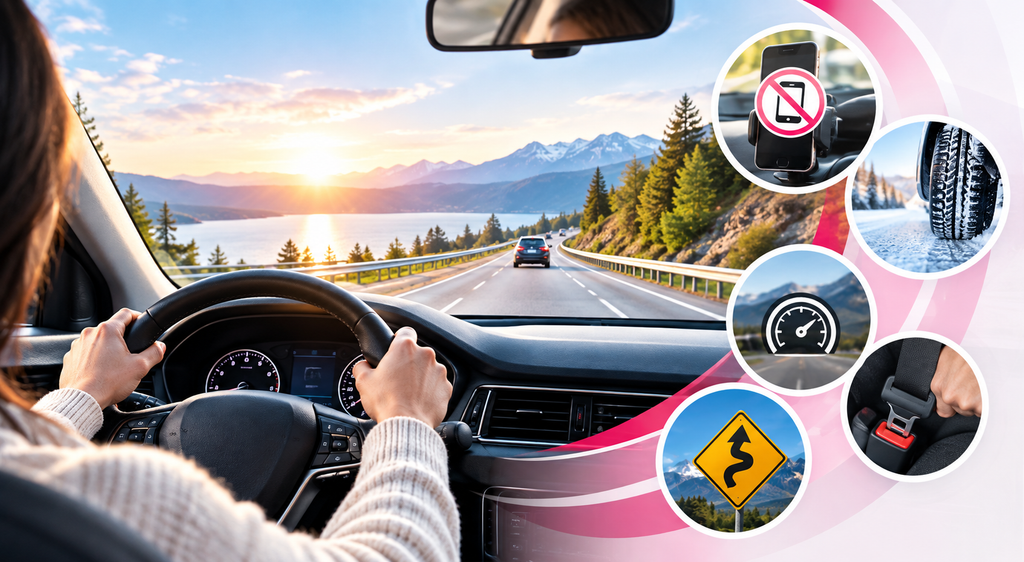
Keeping your vehicle in good condition is another practical part of driving safety tips, especially before longer trips.
| Item | What to check | How often |
| Tires | Pressure and tread | Monthly |
| Lights | Headlights, brake lights, signals | Weekly |
| Brakes | Grinding, squealing, or a soft pedal | Get checked at the first sign |
| Wipers and washer fluid | Streaks and fluid level | Monthly |
| Recalls | NHTSA.gov/recalls, using your license plate or VIN | At least twice a year |
Planning rest stops and checking your vehicle are practical driver safety practices for longer journeys.
What Road Safety Tips Protect Pedestrians, Cyclists, and Teen Drivers?
- Share the road: give cyclists room, yield as you would to other vehicles, and watch for pedestrians in hard-to-see conditions.
- Move over and slow down: when approaching a stationary emergency, tow, or road-work vehicle with the required warning lights, move over when safe or slow down as required.
- Respect school buses: yellow flashing lights mean slow down and prepare to stop, and red lights with an extended stop arm mean a full stop.
- Coach teen drivers: stress seat belts, speed limits, and phones away, and limit passengers. You have more influence than you think.
- Protect children: use the right car seat, and keep kids under 13 in the back seat.
How Can Technology Support Driver Safety Practices for Families?
Good habits come first, and technology can back them up. My Drive Guardian checks for alcohol before ignition and keeps the vehicle from starting if the reading is above the configured threshold. It also sends real-time alerts to trusted contacts and shows live GPS location and trip history in one app, so parents of young drivers can worry less. It isn’t a replacement for careful driving. It’s one more layer of protection.
Drive Safe, Arrive Home
Safer driving starts with the habits you practice every day. Keep your mind on the drive, give yourself plenty of space to react, slow down when the road calls for it, and check that you’re prepared before you head out. For families who want an extra layer of visibility and protection, My Drive Guardian can help you stay connected with vehicle status, safety notifications, and location information while you’re on the road.
FAQs
Frequently Asked Questions
This is a safe distance measure to follow. Start counting three seconds after the car in front passes a fixed obstacle. Add more time in bad weather or heavy traffic.
Follow these safe driving tips: wear your seat belt, avoid distractions, never drive impaired or drowsy, keep a safe gap, and match your speed to conditions.
Distraction, speeding, and impaired driving are leading behavior-related factors in fatal crashes. All three are preventable.
Many safety groups suggest a short break about every two hours. Stop sooner if you feel drowsy.