These winter driving safety tips come down to three things: slow down, leave more space, and prepare your car and route before you leave.
Did you know that an estimated 101,390 police-reported crashes in the U.S. occurred when snow or sleet was present in 2023? If you’re driving from San Francisco, CA, toward the Sierra Nevada, conditions can change quickly as you gain elevation. Checking your vehicle, slowing down, and knowing the road conditions before you leave can make a big difference.
For families who want an extra layer of visibility, My Drive Guardian can also help trusted contacts stay informed about vehicle status and location while you’re on the road.
Key Takeaways
- Check your vehicle before leaving: Before winter sets in, check your tires, lights, wipers, battery, defroster, heater, and washer fluid.
- Drive slower on slippery roads: Cut your speed and allow more room between you and the vehicle ahead.
- Avoid sudden movements: Gentle braking, steering, and acceleration help your tires grip snow and ice.
- Check California road conditions: If you’re heading from the Bay Area into the mountains, check Caltrans QuickMap for current conditions, closures, incidents, and chain restrictions.
- Carry a winter emergency kit: Keep items such as an ice scraper, torch, warm clothing or blankets, water, food, and a charger for your phone in your vehicle.
- Keep technology from becoming a distraction: Set navigation before driving and use hands-free features appropriately.
- Consider family visibility: A connected driving safety app such as My Drive Guardian can help trusted contacts stay informed about vehicle status and location.
What Are the Best Winter Driving Safety Tips Before You Leave?
Most winter trouble starts before the engine does. Ten minutes of prep can save you hours of stress.
Check Tire Tread and Pressure
Your tires are the only thing that touches the road on your car. For snow conditions, Caltrans recommends a minimum tread depth of 6/32 inch. Cold temperatures can also reduce tire pressure, so check your tires before heading into the mountains.
Pack a Winter Emergency Kit
It is like a little survival kit for your car:
- Chains in the right size for your tires
- Flashlight, phone charger, and navigation backup
- Blankets, extra clothing, and gloves
- Water and snacks
- Ice scraper and a small shovel
Check Weather and Road Conditions
For better winter road safety, check the forecast before you leave, and check conditions again before you start the return journey.
Don’t leave your family’s safety to chance. Prepare tonight, not on the shoulder.
How Can You Stay Safe While Driving in Ice and Snow?
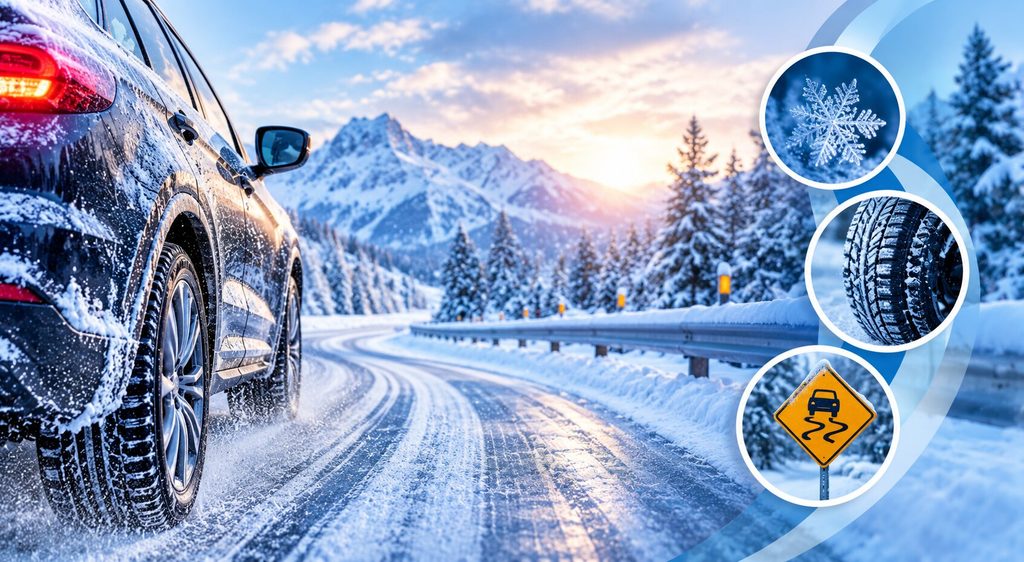
Snow and ice reduce pavement friction and vehicle maneuverability, making it harder to stop and control your vehicle. Your driving has to change with the road.
Slow Down and Increase Following Distance
Ignore the posted limit if conditions say otherwise. Many driving instructors suggest eight to ten seconds of following distance on snow and ice, well beyond the usual three. That gap is your only real brake.
Brake, Steer, and Accelerate Smoothly
Think of a cup of coffee, filled to the top, placed on your dashboard. Gentle inputs keep your tires gripping, and sudden moves break traction. Start slowly, brake early, and steer gradually.
Handle Skids and Black Ice
If the car slides, stay calm:
- Ease off the gas.
- Look and steer where you want to go.
- Don’t slam the brakes.
- Watch bridges and shaded corners, because they freeze first.
Take Hills Carefully
Slow down before a downhill, not during it, and use a lower gear if you can. On the way up, keep a steady pace and avoid stopping partway.
What Should You Know About Chain Controls and Cold Weather Driving Safety in California?
For cold weather driving safety in California, it helps to understand the three chain-control levels. R-1 and R-2 are the most common, and a highway will often be closed before an R-3 condition is imposed.
| Level | What it means |
| R-1 | Chains required, except light passenger vehicles with snow tires on at least two drive wheels |
| R-2 | Chains required, except 4WD/AWD with snow-tread tires on all four wheels (they must still carry chains) |
| R-3 | Chains required on every vehicle, no exceptions |
You’ll usually have about a mile between the “Chains Required” sign and the checkpoint, and you must pull completely off the road to install them. The CHP can cite and fine you if you skip it. When chains are required, Caltrans states that the speed limit in chain-control areas is generally 25 or 30 mph; follow the speed shown on the posted signs for your route.
If you’re heading into the mountains, practice installing your chains before you need them. It is much easier to work out the process at home than beside a snowy roadway.
How Can Technology Support Winter Driving for Your Family?
You can’t control the weather, but you can control how prepared your family feels. My Drive Guardian adds another layer of driving safety by checking for alcohol before ignition and preventing the vehicle from starting when the reading is above the configured threshold. The system also provides real-time alerts, live GPS location, and trip history through its app. It doesn’t replace safe winter driving, but it can give trusted contacts greater visibility while a family member is on the road.
What Should You Do If Your Car Gets Stuck in Ice or Snow?
If snow or ice leaves you stranded, stay with your vehicle whenever it is safer to do so. Make the vehicle visible to rescuers, keep the exhaust pipe clear of snow, and avoid running the engine continuously in an enclosed or poorly ventilated area.
This is also where preparation pays off. A charged phone, warm clothing, water, food, and a way to signal for help can make an unexpected wait much easier to manage.
Don’t try to force your way through worsening conditions simply because you’ve already started the trip. If conditions get worse, it could be better to find a safe spot to stop or delay non-essential travel.
How Can Families Stay Connected During Winter Drives?
Winter trips can involve changing road conditions, delays, and longer travel times. For families, knowing that a driver has arrived, when a vehicle has started, or where the vehicle is can provide useful peace of mind without requiring constant calls or messages.
My Drive Guardian adds another layer of visibility by giving trusted contacts access to vehicle status and location through its app. It should complement good driving habits, not replace them.
The most important rule remains simple: don’t interact with your phone while driving. Set navigation before you leave, use hands-free features where appropriate, and pull over safely if you need to deal with your device.
A Safer Winter Drive Starts Before the Engine Does
The best winter driving safety tips are not complicated. Prepare the vehicle, check the route, leave extra time, slow down when conditions demand it, and don’t force a journey when the road says otherwise.
For families, an additional layer of visibility can also make winter travel easier to manage. My Drive Guardian combines vehicle protection, safety notifications, and connected vehicle information to help families stay informed while their loved ones are on the road.
Planning a winter trip? Take a few minutes now to prepare your vehicle and route. A little preparation today can make a difficult winter drive much easier tomorrow.
FAQs
Frequently Asked Questions
Slow down, leave extra space, and brake, steer, and accelerate gently. Check your tires and pack an emergency kit before you leave.
Sometimes. Under R-2, AWD vehicles with snow-tread tires on all four wheels can skip chains, but they must still carry them. Under R-3, every vehicle needs chains.
There's no single number. Drive well below the posted limit and match your speed to traction and visibility. In chain control zones, the limit is 25 to 30 mph.
Chains, a flashlight, blankets, water, snacks, gloves, an ice scraper, a shovel, a charger, and a paper map.