Distracted driving laws differ from state to state, but nearly every U.S. driver is banned from texting behind the wheel, and a growing number of states also limit handheld phone use.
You’re sitting at a red light. Your phone buzzes. You glance down because, technically, the car isn’t moving. But are you actually allowed to? That’s where distracted driving laws get a little more complicated.
There isn’t one nationwide rule covering every driver and every type of phone use. States set most of their own restrictions, and the rules can differ on texting, handheld phones, hands-free use, novice drivers, school buses, and when a driver is considered to be “operating” a vehicle.
According to the Governors Highway Safety Association (GHSA), 49 states, Washington, D.C., and several U.S. territories prohibit texting for all drivers. Meanwhile, 33 states ban all drivers from using handheld cell phones while driving.
The real question isn’t whether distracted driving is illegal.
It’s what does your state prohibit, when does the rule apply, and what should you do when you’re behind the wheel?
Key Takeaways
- There are no single distracted driving regulations that apply to every U.S. driver. State rules determine what is prohibited.
- Texting is prohibited for almost all drivers nationwide, although exact definitions and enforcement can differ.
- Handheld phone laws go beyond texting by restricting holding or using a phone while driving.
- Hands-free does not mean distraction-free. Even with both hands on the wheel, a driver can still be mentally distracted by a conversation or a device.
- Stopping at a red light doesn’t give you permission to pick up your phone. The answer depends on the wording of the applicable law.
- Novice drivers can face stricter restrictions, including bans on cellphone use.
- Commercial drivers have additional federal restrictions on texting and handheld mobile phone use.
- Following the law is the starting point, not the entire safety strategy.
Who Makes the Rules for Distracted Driving?
For most everyday drivers, distracted driving regulations are primarily a state-level issue. That doesn’t mean the federal government has no role. Federal rules apply to certain drivers and situations. For example, the Federal Motor Carrier Safety Administration (FMCSA) prohibits interstate commercial motor vehicle drivers from texting while driving and restricts their use of handheld mobile phones.
For the average person driving a personal vehicle, however, the rules you need to pay the most attention to are the laws in the state where you’re driving.
And those laws aren’t identical.
Some states prohibit handheld cellphone use for all drivers, while others have more limited restrictions. Some also impose additional cellphone restrictions on novice drivers or school bus drivers. GHSA’s June 2026 state-law overview shows just how much these rules vary.
That’s why a road trip can change the rules without you realizing it.
How Are Texting While Driving Laws Different From Hands-Free Laws?
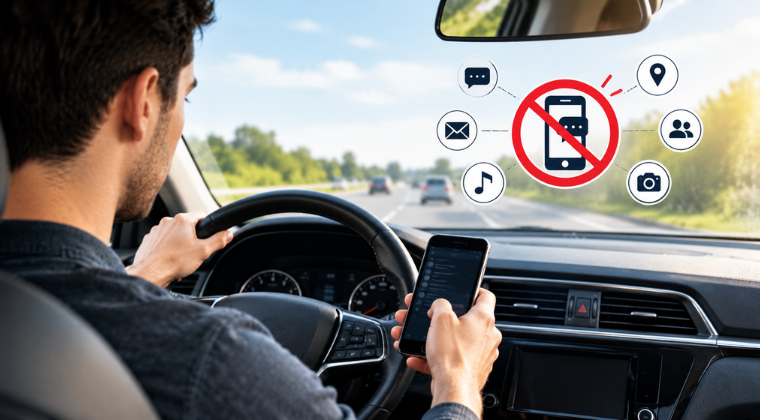
The easiest way to understand the difference between texting while driving laws and other phone-use restrictions is to look at what the law is actually trying to restrict.
| Type of rule | What it generally addresses |
| Texting ban | Reading, writing, or sending text-based messages while driving |
| Handheld cellphone ban | Holding or manually using a cellphone while driving |
| Hands-free requirement | Requires certain phone functions to be used without holding the device |
| Novice-driver restriction | Places additional cellphone restrictions on younger or less-experienced drivers |
| Commercial-driver rules | Federal restrictions covering texting and handheld mobile phone use for certain CMV drivers |
These categories can overlap.
For example, a state may prohibit texting for every driver but also have a separate handheld-device restriction. Another state may impose additional rules on drivers with learner or intermediate licenses.
GHSA’s June 2026 state-law overview reports that 36 states and D.C. prohibit all cellphone use by novice drivers, while 25 states and D.C. prohibit cellphone use by school bus drivers.
The takeaway is simple: don’t assume that a rule covering texting also covers every other type of phone use.
What Are the Most Common Misunderstandings About Distracted Driving Laws?
Distracted driving laws can be confusing because people often rely on rules they’ve heard from friends, social media, or another state. Here are a few assumptions worth reconsidering.
“I’m Not Texting, So I Can Use Phone.”
Not necessarily. Texting while driving laws and handheld-phone bans are different things, so one restriction does not necessarily tell you what other types of phone use are prohibited. If your state prohibits handheld cellphone use, avoiding text messages doesn’t necessarily make holding the phone legal.
“I’m Using Bluetooth, So I’m Completely Safe.”
Hands-free technology can reduce the need to handle a phone physically, but it doesn’t eliminate every form of distraction.
NHTSA defines distracted driving broadly as any activity that diverts attention from driving, including talking or texting on a phone, eating, interacting with passengers, and adjusting entertainment or navigation systems.
“The Law Is the Same Everywhere.”
It isn’t. GHSA’s state-by-state information shows substantial differences in handheld cellphone restrictions, novice-driver rules, school bus rules, and enforcement.
If you’re crossing a state line, don’t assume your home state’s rules follow you.
“Only Phone Use Counts as Distracted Driving.”
Phone use gets much of the attention, but distraction is broader.
Eating, adjusting the radio, interacting with passengers, entering navigation information, and other activities can take attention away from driving. NHTSA considers these potential forms of distracted driving even when a particular activity isn’t prohibited by a specific state statute.
What Penalties Can Drivers Face?
The consequences under distracted driving regulations depend on the state, the specific violation, and sometimes the driver’s previous record. Depending on the jurisdiction, a distracted-driving violation can involve:
- Fines
- Increased penalties for repeat offenses
- License points
- Possible effects on driving privileges
- Other consequences under state law
Some distracted-driving violations can also become more serious when they are connected with a crash or another offense.
Commercial drivers face additional federal consequences. FMCSA states that violations of its texting and handheld-phone restrictions can result in civil penalties and, for multiple offenses, driver disqualification.
Because penalties and legal definitions change, drivers should check their state’s current official information rather than rely on a general dollar amount from an old article.
How Can You Make Everyday Driving Easier and Safer?
Knowing the law is useful. Making the safer choice automatic is even better.
A few simple habits can remove many of the situations where you have to decide while driving.
Set Up Before You Pull Away
Enter your destination, choose your music, adjust the climate controls, and take care of anything else that could pull your attention away once you’re moving.
Silence Unnecessary Notifications
If you don’t need to see a notification while driving, don’t give it the opportunity to compete for your attention.
NHTSA recommends activating features such as Do Not Disturb, silencing notifications, or putting the phone somewhere you won’t be tempted to reach for it.
Keep the Phone Out of Reach
The fewer opportunities you have to pick up your phone, the fewer decisions you have to make about whether to use it.
Pull Over When Something Can Wait
If a message really needs a response, find a safe place to stop. Five minutes of inconvenience is a much simpler solution than trying to type, scroll, or navigate while driving.
Where Does Technology Fit Into Distracted Driving Safety?
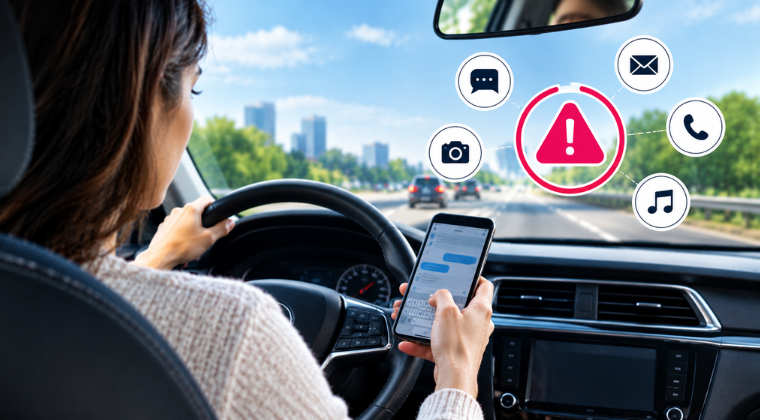
Technology can help create better driving habits, but it shouldn’t become another thing the driver needs to manage. Phone-based features can reduce notifications or restrict certain interactions while a vehicle is moving. Hands-free systems can also reduce the need to hold a device physically.
But not every driving-safety concern starts with a phone.
For families, the safety questions may extend beyond phone use: Where is the vehicle? Is a driver safe to start the trip? What information should a trusted contact be able to see while someone is on the road?
That’s where a vehicle-connected approach can make sense.
My Drive Guardian combines vehicle-connected safety features with family-oriented information such as vehicle location, driver status, and trip history. It also includes alcohol detection and ignition protection, extending safety support to the point before a trip begins.
The point isn’t to replace good driving habits or suggest that technology can eliminate every risk. It’s to put the right safety feature around the problem you’re actually trying to address.
How Should You Check the Law Before a Road Trip?
Don’t rely on an old social media post or something you remember from a previous trip when checking the laws on distracted driving.
Instead:
- Check the official rules for your home state.
- Look up the laws for states you’re traveling through.
- Pay attention to rules for novice drivers if someone in your household has a learner or intermediate license.
- Check for special rules involving school zones, school buses, or other specific situations.
- Use current state information because distracted-driving laws can change.
GHSA provides a useful state-by-state overview, but it specifically advises drivers to consult the appropriate State Highway Safety Office for additional information.
Ready to Give Your Family More Driving Visibility?
Knowing distracted driving laws is important, but safer driving doesn’t stop with legal compliance. My Drive Guardian gives families another way to stay connected with what matters, combining real-time safety alerts, vehicle location, driver status, and trip history with vehicle-level features such as alcohol detection and ignition protection.
Request a demo today and see how My Drive Guardian can add another layer of support to the way your family drives.
FAQs
Frequently Asked Questions
There is no single distracted-driving law covering every driver. States establish most rules for everyday motorists, including restrictions on texting, handheld cellphone use, and cellphone use by certain drivers.
Almost. GHSA currently reports that 49 states, D.C., and several U.S. territories prohibit text messaging for all drivers. Washington was the first state to enact a texting ban in 2007.
No. Hands-free driving laws and handheld-device restrictions vary by state. Some states also have additional restrictions for novice drivers and school bus drivers.
It depends on the law where you're driving. A temporary stop does not automatically make phone use legal. The safest option is to avoid handling your phone until you're safely parked.
Federal distracted-driving rules apply to certain categories of drivers, including interstate commercial motor vehicle drivers. Most rules affecting people driving personal vehicles are established at the state level.
Start with your state's official transportation, highway safety, or DMV resources. GHSA also maintains a state-by-state overview, but recommends checking with the appropriate State Highway Safety Office for specific legal details.